
Fabric quality is no longer judged only by fiber content or weave density. In real markets, what matters most is how a fabric behaves after it leaves the factory and enters daily use. Wrinkles that appear after a single wash, permanent creases formed during storage, or surfaces that lose their original flatness quickly all send a clear signal to buyers and end users alike. These visible changes shape perceptions of quality far more than technical specifications printed on a label.
Wrinkle-resistant finishing plays a quiet but decisive role in this process. It determines whether a fabric maintains its intended appearance through repeated laundering, handling, and long-term use. For home textiles and apparel fabrics alike, this finishing step is often the difference between a product that feels premium over time and one that looks tired far too early.
How Wrinkles Change the Perceived Value of Fabric
Wrinkles are not merely an aesthetic issue. They affect how consumers interact with textiles in everyday life. A fabric that creases easily creates friction in daily routines, requiring extra ironing, careful storage, or limited use. Over time, this inconvenience reduces satisfaction, even if the fabric itself was originally well constructed.
In bedding products, visible wrinkles can disrupt the clean, orderly look people expect in bedrooms and hospitality environments. In garments, excessive wrinkling can make clothing appear worn or poorly made, even when the fibers themselves remain intact. This perception directly influences repeat purchases and brand trust.
Wrinkle-resistant finishing addresses this gap between production quality and real-world performance. Stabilizing the internal structure of the fabric, it helps materials return to a smoother state after deformation, preserving their original look with minimal effort from the user.
What Wrinkle-Resistant Finishing Actually Does to Fabric
At its core, wrinkle-resistant finishing works by modifying how fibers behave under stress. During wearing, folding, or washing, fibers bend and compress. Without stabilization, these deformations become permanent, forming creases that resist recovery.
Wrinkle-resistant treatments introduce controlled chemical or mechanical changes that help fibers rebound after stress. In woven fabrics, this often involves resin-based or formaldehyde-free anti-crease agents that create flexible cross-links within the fiber structure. These cross-links allow the fabric to bend while retaining a memory of its original shape.
The result is not stiffness, but controlled resilience. Well-executed wrinkle-resistant finishing maintains softness, drape, and breathability while improving dimensional stability. This balance is what separates high-quality finishing from low-grade treatments that leave fabrics rigid or lifeless.
Functional Wrinkle Resistance Versus Visual Texture
Not all wrinkle-related finishes aim for smoothness alone. In modern textile design, intentional texture has become a valuable aesthetic feature. Crinkle-effect finishing creates a permanent, controlled wrinkled appearance that adds depth and character to fabrics used in decorative home textiles and fashion-forward collections.
While functional wrinkle resistance focuses on minimizing unwanted creases, crinkle-effect finishing embraces texture as a design element. Through precise mechanical compression and heat-setting, fabrics develop stable surface patterns that remain consistent through washing and use. This intentional wrinkling does not relax over time, ensuring visual continuity across the product’s lifespan.
Both approaches rely on deep control of fabric tension, temperature, and finishing parameters. Whether the goal is smooth flatness or expressive texture, finishing quality determines whether the result feels intentional or accidental.
Where Wrinkle-Resistant Finishing Matters Most
Wrinkle-resistant finishing shows its value most clearly in products exposed to repeated handling and laundering. Home textiles, in particular, face constant cycles of washing, drying, folding, and storage. Without proper finishing, even high-thread-count fabrics can lose their appeal quickly.
Bedding fabrics benefit from wrinkle-resistant finishing by maintaining a neat surface appearance on the bed, reducing the need for ironing, and improving user experience. Curtains and decorative textiles retain cleaner lines and sharper folds, contributing to interior aesthetics over time.
In apparel fabrics, wrinkle resistance supports professional appearance and daily comfort. Shirts, uniforms, and structured garments rely on finishing to hold their shape through long wear and frequent washing. In these applications, wrinkle resistance becomes part of the product’s functional promise, not just an added feature.

Key Benefits of High-Quality Wrinkle-Resistant Finishing
When executed correctly, wrinkle-resistant finishing delivers a combination of practical and commercial advantages that extend across the supply chain.
-
Improved surface smoothness and visual consistency after washing
-
Reduced need for ironing or special care
-
Better shape retention during storage and transportation
-
Enhanced perceived quality and product longevity
These benefits translate into lower return rates, stronger brand reputation, and higher customer satisfaction. For manufacturers and brands, wrinkle-resistant finishing becomes a strategic tool rather than a cosmetic upgrade.
Long-Term Performance Versus Short-Term Appearance
One of the most important distinctions in wrinkle-resistant finishing is durability. Some finishes deliver impressive results immediately after production but degrade quickly after a few wash cycles. True wrinkle resistance is measured over time, not at the point of shipment.
Durable finishing systems maintain performance through repeated laundering, mechanical stress, and temperature variation. This requires precise control over chemical application, curing conditions, and fabric tension throughout the finishing process. Inconsistent dosing or uneven heat distribution can lead to patchy performance, stiffness, or unwanted odor.
Long-term shape retention is especially critical in premium textiles, where consumers expect products to age gracefully. A fabric that remains smooth and stable months or years after purchase reinforces trust in the brand behind it.
Wrinkle-Resistant Finishing and Fabric Hand Feel
A common concern among buyers is whether wrinkle-resistant finishing compromises softness. Poorly applied treatments can indeed leave fabrics feeling stiff or artificial. However, advanced finishing systems are designed to preserve natural hand feel while improving resilience.
Modern wrinkle-resistant finishes use optimized resin formulations or formaldehyde-free alternatives that integrate seamlessly with fiber structures. When combined with controlled curing and tension management, these finishes maintain flexibility and drape.
In practice, the best wrinkle-resistant fabrics feel no different to the touch than untreated ones—except they recover better after use. This subtlety is essential in competitive markets where tactile experience strongly influences purchasing decisions.
Production Control and Consistency in Finishing
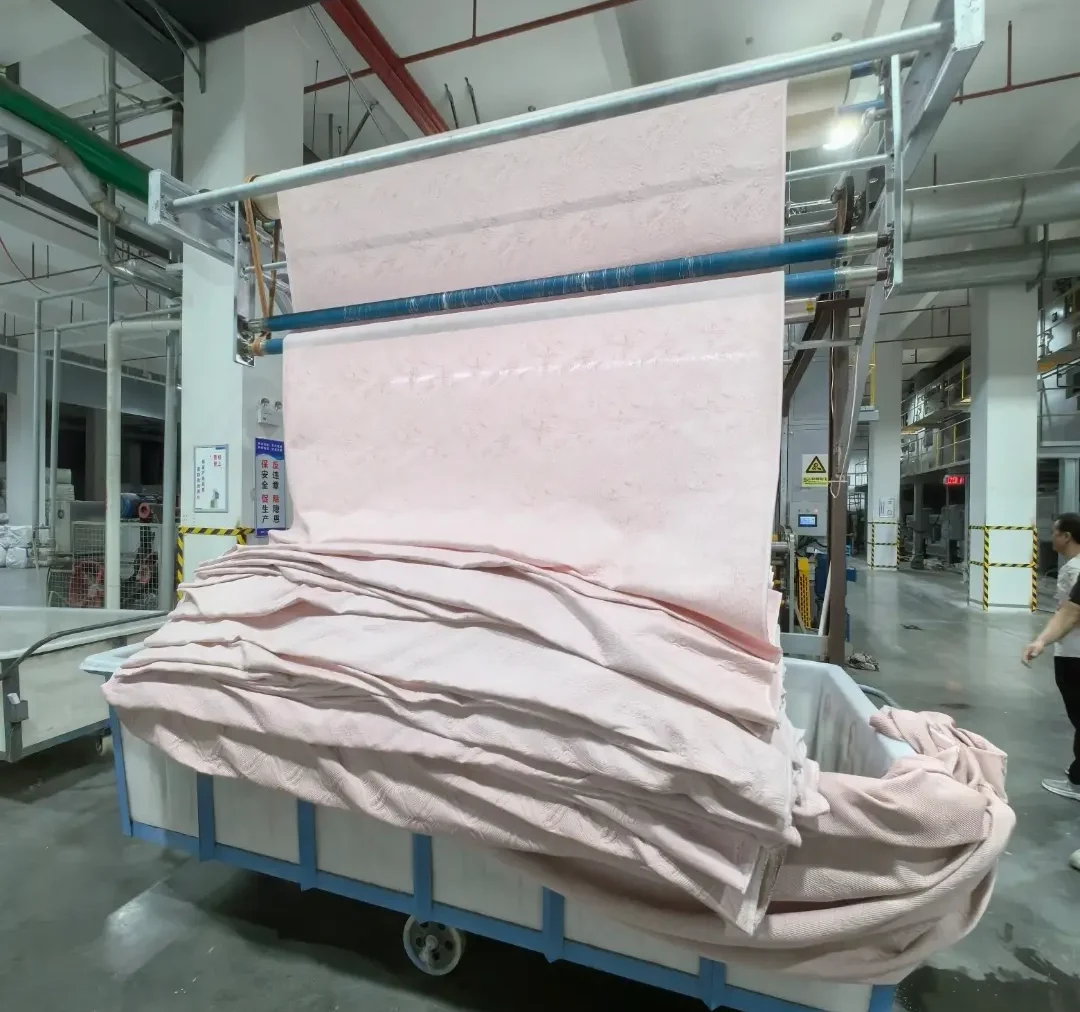
Consistency is the hidden foundation of effective wrinkle-resistant finishing. Variations in fabric density, moisture content, or surface tension can all affect how finishes perform. Advanced finishing facilities rely on automated dosing systems, digital monitoring, and precise tension control to eliminate these variables.
By maintaining stable process conditions, manufacturers reduce risks such as uneven texture, resin odor, color shift, or localized stiffness. This level of control ensures that each production batch meets the same performance standards, supporting reliable downstream processing and branding.
In regions like Nantong, where large-scale home textile manufacturing is concentrated, finishing consistency becomes a competitive advantage. Buyers increasingly prioritize suppliers who can deliver repeatable results across large volumes.
Comparing Fabrics With and Without Wrinkle-Resistant Finishing
| Aspect | Without Wrinkle-Resistant Finishing | With Wrinkle-Resistant Finishing |
|---|---|---|
| Appearance after washing | Visible creases and distortion | Smooth, consistent surface |
| Maintenance effort | Frequent ironing required | Minimal care needed |
| Shape retention | Degrades over time | Maintains original form |
| Perceived quality | Declines quickly | Remains premium |
| User satisfaction | Decreases with use | Stable over the long term |
This comparison highlights why wrinkle-resistant finishing is not a marginal improvement, but a defining factor in fabric performance.
Environmental and Safety Considerations
Modern wrinkle-resistant finishing increasingly emphasizes safety and sustainability. Formaldehyde-free systems and low-emission resins reduce environmental impact and improve workplace conditions. Certifications such as OEKO-TEX®, BSCI, and GRS provide additional assurance that finishes meet international safety standards.
Responsible finishing practices also minimize waste, water usage, and energy consumption. Efficient curing processes and controlled application reduce excess chemical runoff, aligning textile production with evolving environmental expectations.
For brands, these factors influence not only compliance but also market positioning. Eco-conscious consumers increasingly associate fabric performance with responsible manufacturing.
Wrinkle Resistance as a Design Enabler
Beyond functional benefits, wrinkle-resistant finishing expands creative possibilities. Designers gain confidence that their intended silhouettes, textures, and surface effects will survive real-world use. This is especially important for structured garments, decorative fabrics, and layered textile products.
Crinkle-effect finishes, in particular, allow designers to introduce texture without sacrificing durability. The permanence of the effect ensures visual stability, supporting consistent branding across collections.
In this sense, wrinkle-resistant finishing does not constrain design—it enables it.
Why Buyers Should Look Beyond Price
In procurement decisions, finishing quality is often overshadowed by unit cost. However, wrinkle-resistant finishing directly affects downstream costs associated with returns, complaints, and brand perception. A slightly higher initial investment can significantly reduce long-term risk.
Buyers evaluating wrinkle-resistant fabrics should focus on performance consistency, wash durability, and hand feel rather than surface appearance alone. Asking the right questions about finishing processes and quality control can prevent costly surprises after products reach the market.
The Strategic Role of Wrinkle-Resistant Finishing
Wrinkle-resistant finishing is no longer an optional enhancement. It is a strategic element that shapes how fabrics perform, how products are perceived, and how brands are judged over time. In competitive textile markets, finishing quality often becomes the silent differentiator that determines success or failure.
From bedding and decorative textiles to woven apparel fabrics, wrinkle resistance influences usability, aesthetics, and value retention. When supported by advanced production control and responsible practices, it transforms fabric from a raw material into a reliable, long-term product.
Fabric quality lives in daily experience, not in laboratory descriptions. Wrinkle-resistant finishing bridges the gap between design intent and real-world performance. It ensures that textiles remain smooth, stable, and visually consistent long after they leave the production line.
For manufacturers, brands, and buyers alike, understanding the role of wrinkle-resistant finishing is essential. It is not simply about reducing creases—it is about protecting the integrity, usability, and value of fabric throughout its entire lifecycle.