
Introduction
If you have ever wondered why certain fabrics fade unevenly while others retain their vibrant, uniform color wash after wash, the answer lies not in the dye itself, but in the precision of the application. The right overflow dyeing technology transforms ordinary fabric into a premium textile characterized by exceptional color depth, uniformity, and long-term durability.
While traditional dyeing methods—such as jigger dyeing or conventional jet systems—often struggle to achieve consistent dye penetration on delicate or high-elasticity fabrics, they frequently result in shade variation, fiber stress, and premature wear. For leading apparel brands, the choice of dyeing technology is a strategic decision that directly determines product quality, brand reputation, and customer satisfaction.
The economic landscape reflects this shift toward precision. The global textile dyes market was valued at approximately $12.65 billion in 2025 and is projected to grow at a CAGR of 4.72% through 2031, driven by rising demand for vibrant colors and eco-efficient solutions. Simultaneously, the overflow dyeing machine market—the critical infrastructure behind this technology—was valued at $1.60 billion in 2025 and is expected to reach $2.78 billion by 2032, representing a robust CAGR of 8.21%. These figures underscore a clear industry consensus: brands are aggressively migrating toward specialized overflow dyeing technology to meet escalating quality and environmental standards.
This article explores why reproducible overflow dyeing technology has become the benchmark for premium apparel, how low-tension overflow dyeing technology protects delicate fiber integrity, what makes uniform overflow dyeing technology essential for consistent coloration, and why adopting sustainable overflow dyeing technology supports both commercial profitability and global environmental goals.
What Is Overflow Dyeing Technology? Understanding the Fundamentals
Overflow dyeing technology is a batchwise, rope-form dyeing process in which fabric moves continuously through a closed chamber, propelled by the gravitational flow of dye liquor rather than by mechanical tension. The fabric is carried along by the liquid overflow, circulating repeatedly until the dye has been completely and uniformly absorbed. This contrasts sharply with conventional dyeing systems, where fabric is pulled or wound through the dye bath under significant mechanical force.
The principles of overflow dyeing and jet dyeing are similar—fabric being dyed runs cyclically, and dye liquor also flows cyclically. The fabric, loaded in rope form, is moved by both the driving force of a lifting reel and the pushing force generated by the nozzle liquor. Dye liquor is sprayed or jet-fed onto the fabric as the fabric passes through the nozzle, which is the main site of dye-fiber exchange during repeated circulation. The overflow and jet dyeing machines are distinguished primarily by fabric running rate: generally, rates below 350 m/min are classified as overflow dyeing, while rates above 350 m/min fall under jet dyeing.
In overflow circulation, fabric movement relies on a gentle flow of dye liquor moving by gravity and the overflow principle, ensuring a soft and even distribution of dye over the fabric. The overflow system can continuously flush the fabric with clean water, effectively removing excess dye to improve color fastness. This design keeps the fabric in a relaxed state throughout dyeing, significantly reducing mechanical stress and preserving the fabric’s natural elasticity, hand feel, and structural integrity.
Why Leading Brands Choose Overflow Dyeing Technology
1. Superior Color Depth and Penetration
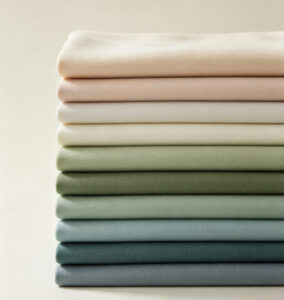
For high-end apparel, deep, saturated color is often the first thing a customer notices. Uniform overflow dyeing technology ensures that dye molecules fully penetrate every fiber—not just the surface—because the liquor circulates continuously and completely immerses the fabric. The high-speed movement of the fabric together with the circulation of dye liquor enhances dye-fiber interaction, leading to better color penetration and fixation. Traditional methods such as pad dyeing or beam dyeing may leave fabric surfaces inconsistently coated, particularly on bulky or multi-layer constructions. By contrast, the overflow dyeing method achieves deep shade performance, especially on double-layer yarn fabrics and triple-layer cotton-lined textiles, where uniform dye uptake is traditionally difficult.
This superior penetration capability is why brands choose overflow dyeing technology for deep shade application. The consistent flow of dye liquor is crucial for even dyeing; when dye concentration is optimized, the entire fabric surface receives equal access to dye molecules, eliminating the streaking and mottling that can compromise premium product lines.
2. Low‑Tension Overflow Dyeing Technology: Preserving Delicate Fabrics
High-elasticity knits, spandex blends, lace, microfiber constructions, and multi-layer textiles are notoriously vulnerable to mechanical damage during dyeing. Tension applied during conventional processes can stretch, distort, or even tear these sensitive fabrics. Low-tension overflow dyeing technology solves this problem by replacing mechanical pulling with hydrodynamic propulsion.
The overflow action provides a soft and smooth movement of the fabric through the dye liquor, which minimizes mechanical stress on the fabric. Fabric circulates within sealed chambers where directional fluid dynamics replace mechanical tension, making this technology particularly advantageous for tubular knits requiring dimensional stability. Lycra-blend sportswear fabrics benefit from this turbulence-driven immersion that prevents fiber stress accumulation. The fabric moves in a relaxed manner in the dye liquor, reducing the chances of creasing or stretching.
For delicate fabrics like silk, modal, Tencel, or fine cotton, preserving hand feel while achieving uniform color is essential. Low liquor ratio designs further reduce fabric weight during running, lowering tension and minimizing fuzziness caused by continuous motion. Third-party testing data indicate that overflow-dyed polyester maintains abrasion resistance exceeding 9,000 cycles, outperforming jig-processed cotton’s 5,500 cycles.
3. Uniform Overflow Dyeing Technology – Eliminating Shade Variation
Inconsistent color between rolls—or even within a single roll—is a nightmare for any textile buyer. Uniform overflow dyeing technology delivers lot‑to‑lot consistency that builds brand trust. The continuous circulation of dye liquor ensures that every segment of fabric receives equal exposure to dye, regardless of its position in the batch.
Jig and beam dyeing methods can produce head-to-tail shading because the leading edge of the fabric remains in contact with the dye bath longer than the trailing edge. Overflow dyeing avoids this entirely: the closed-loop circulation means the entire fabric batch cycles through the nozzle for equal duration and at equal intensity. The dye bath ratio—the ratio of liquid weight to fabric weight—is optimized to maintain uniformity. Typical overflow machines operate at a liquor ratio between 1:6 and 1:10.
Advanced overflow systems are also equipped with automated chemical dosing, digital recipe management, and real‑time monitoring, enabling mills to maintain stability even across large batches. These technical controls ensure that a fabric produced in January matches identically a fabric produced in June, across any color in the brand’s library.
4. Superior Color Fastness and Durability
Fading, bleeding, or transferring color after a few washes is unacceptable for premium apparel. Overflow dyeing technology delivers exceptional color fastness because the process facilitates stronger dye‑fiber bonding. The overflow system can continuously flush the fabric with clean water, effectively removing excess dye that would otherwise remain loosely adhered to fiber surfaces. This thorough washing step prevents unfixed dye from migrating during consumer use—the primary cause of color bleeding in laundry.
Proper after‑treatment in an overflow machine includes choosing the right dye, optimizing the dyeing process, and utilizing a high‑quality machine. For delicate or multi‑layer textiles where deep shade penetration is required, the overflow method ensures high fastness even under repeated washing and rubbing conditions. Brands exporting to markets such as Europe and North America rely on this performance to meet international quality standards and minimize return rates.
5. Sustainable Overflow Dyeing Technology – Meeting Environmental Commitments
Environmental responsibility is no longer optional for leading apparel brands. Water consumption in conventional textile dyeing has been notoriously high: the production of 1 kg of processed fabric consumes roughly 150 liters of water, and dyeing alone accounts for 30 to 150 liters per kilogram depending on the method and country. Textile processes, especially dyeing, contribute 15–20% of total industrial wastewater flow, containing residues of dyes and chemicals.
Sustainable overflow dyeing technology significantly reduces water usage through a low liquor ratio design. Modern overflow machines operate at ratios of 1:6 to 1:10, meaning 6–10 kg of water per 1 kg of fabric, compared to older machines operating at 1:15 or higher. Some advanced models have achieved ultra‑low ratios of 1:5. According to industry data, optimizing the dye bath ratio from 1:10 to 1:5 can cut water consumption by approximately 50% while reducing additive usage by over 60% and dyestuff requirements by 5–10%.
Equipped with heat recovery modules and advanced circulation patterns, sustainable overflow dyeing technology not only lowers operational costs but also reduces the environmental footprint of textile production—an increasingly important differentiator for brands targeting eco‑conscious consumers.
Key Benefits at a Glance
| Benefit | How Overflow Dyeing Technology Delivers |
|---|---|
| Superior color depth | Continuous immersion ensures deep dye penetration; ideal for double‑layer and multi‑layer textiles. |
| Low‑tension fabric handling | Hydrodynamic propulsion replaces mechanical pulling; it preserves fabric elasticity and hand feel. |
| Uniform shade control | Closed‑loop circulation eliminates head‑to‑tail shading; advanced real‑time monitoring ensures reproducibility. |
| Excellent color fastness | Thorough washing removes unfixed dye; resists bleeding and fading after multiple washes. |
| Sustainable operation | Low liquor ratio (1:6–1:10) reduces water use by up to 50%; heat recovery modules lower energy demand. |
| Delicate fabric compatibility | Gentle overflow circulation prevents creasing, stretching, and abrasion; ideal for silk, modal, spandex, and lace. |
Overflow Dyeing Technology vs. Other Dyeing Methods: A Technical Comparison
Overflow Dyeing vs. Jig Dyeing
Jig (or jigger) dyeing passes fabric in open‑width form back and forth between two rollers immersed in the dye bath. While effective for woven fabrics requiring flat handling, jig dyeing applies selective tension that can distort high‑elasticity textiles. Jig systems demonstrate 40% faster color changeover times through segmented trough designs, which is advantageous for smaller bespoke orders requiring frequent shade adjustments. However, for high‑elasticity circular knits, microfiber constructions, or plated fabrics requiring simultaneous face/back coloration, overflow technology is strongly preferred.
Overflow Dyeing vs. Jet Dyeing
Jet dyeing uses high‑velocity jets of dye liquor to propel fabric through the machine at speeds exceeding 350 m/min. While faster, jet dyeing can subject fabrics to higher mechanical stress and may cause creasing or pilling on sensitive materials. Jet machines have significantly faster dyeing speeds compared to overflow machines due to their powerful hydrodynamic design, with batches typically taking only 45 to 90 minutes. However, for fabrics that cannot tolerate high‑speed mechanical action, overflow’s gentler approach—operating below 350 m/min—provides superior protection.
Jet dyeing machines are best suited for knitted fabrics, especially polyester, nylon, and their blends, but are not ideal for delicate or lightweight elastic fabrics. Soft flow dyeing machines combine gentle overflow circulation with mild jet or winch assistance for low‑tension fabric movement, making them an excellent choice for high‑quality fashion and intimate apparel.
Overflow Dyeing vs. Airflow Dyeing
Airflow dyeing uses hot air instead of water to propel fabric through the dye chamber, achieving ultra‑low liquor ratios around 1:3 and saving approximately 30% in energy. However, the liquid medium in overflow machines generally provides better dye transfer and coverage. Dye liquor fully immerses the fabric, allowing dye to penetrate evenly into fibers. In contrast, air jet machines rely on the force of air to carry dye particles onto fabric, which may not always result in as consistent dyeing, especially for thicker or denser constructions.
| Feature | Overflow Dyeing (HT) | Jet Dyeing | Jigger Dyeing | Airflow Dyeing |
|---|---|---|---|---|
| Fabric movement | Gentle overflow circulation | High‑speed jet propulsion | Roller‑guided open width | Hot air propulsion |
| Fabric running rate | Below 350 m/min | Over 350 m/min | Varies; open‑width | Moderate |
| Tension | Low – minimal mechanical stress | Moderate to high | High – controlled tension | Moderate |
| Liquor ratio | 1:6 – 1:10 | 1:8 – 1:15 | 1:3 (low) | 1:3 – 1:5 |
| Best for | Delicate knits, spandex, lace, multi‑layer fabrics | Standard knits, polyester, nylon, blends | Woven fabrics (cotton, linen, canvas) | Polyester, synthetics |
| Dye transfer | Excellent – full immersion | Good – high‑velocity jet | Good – bath immersion | Moderate – air‑carried dye |
| Fabric stress | Very low | Moderate to high | Moderate | Low (but limited dye transfer) |
| Color consistency | Excellent due to uniform circulation | Good for compatible fabric types | Moderate – head‑to‑tail variation possible | Moderate |
| Water consumption | Low to moderate (optimizable) | Moderate to high | Very low (1:3) | Ultra‑low (1:3–1:5) |
| Energy consumption | Moderate (heatable dye liquor) | Moderate to high | Low | Lower (saving about 30%) |
| Typical batch time | Moderate | 45–90 minutes (fast) | Moderate | Moderate |
Who Benefits from Overflow Dyeing Technology?
Premium apparel brands: Fashion houses producing high-end knitwear, activewear, lingerie, and luxury garments rely on overflow dyeing to achieve deep, uniform colors while preserving the delicate hand feel their customers expect.
Home textile manufacturers: Producers of bedding, upholstery, and decorative fabrics benefit from overflow dyeing’s ability to consistently color wide widths and multi‑layer constructions such as double‑layer yarns and triple‑layer cotton‑lined fabrics.
Brands exporting to quality‑sensitive markets: European, North American, and Japanese buyers demand rigorous color consistency, high fastness ratings, and compliance with environmental standards. Overflow dyeing technology delivers stable repeat orders with low color variation, making it the preferred specification for export‑oriented production.
Eco‑conscious brands: Any brand with carbon reduction targets or water stewardship commitments will benefit from overflow dyeing’s low liquor ratios, heat recovery compatibility, and reduced chemical additive usage.
Contract dyehouses and textile mills: For facilities handling diverse fabric types—from delicate spandex blends to heavy knits—overflow dyeing equipment provides the versatility and reproducibility required for cost‑effective multi‑customer operation.
Overflow Dyeing in Action: Real‑World Applications
Double‑Layer and Multi‑Layer Textiles
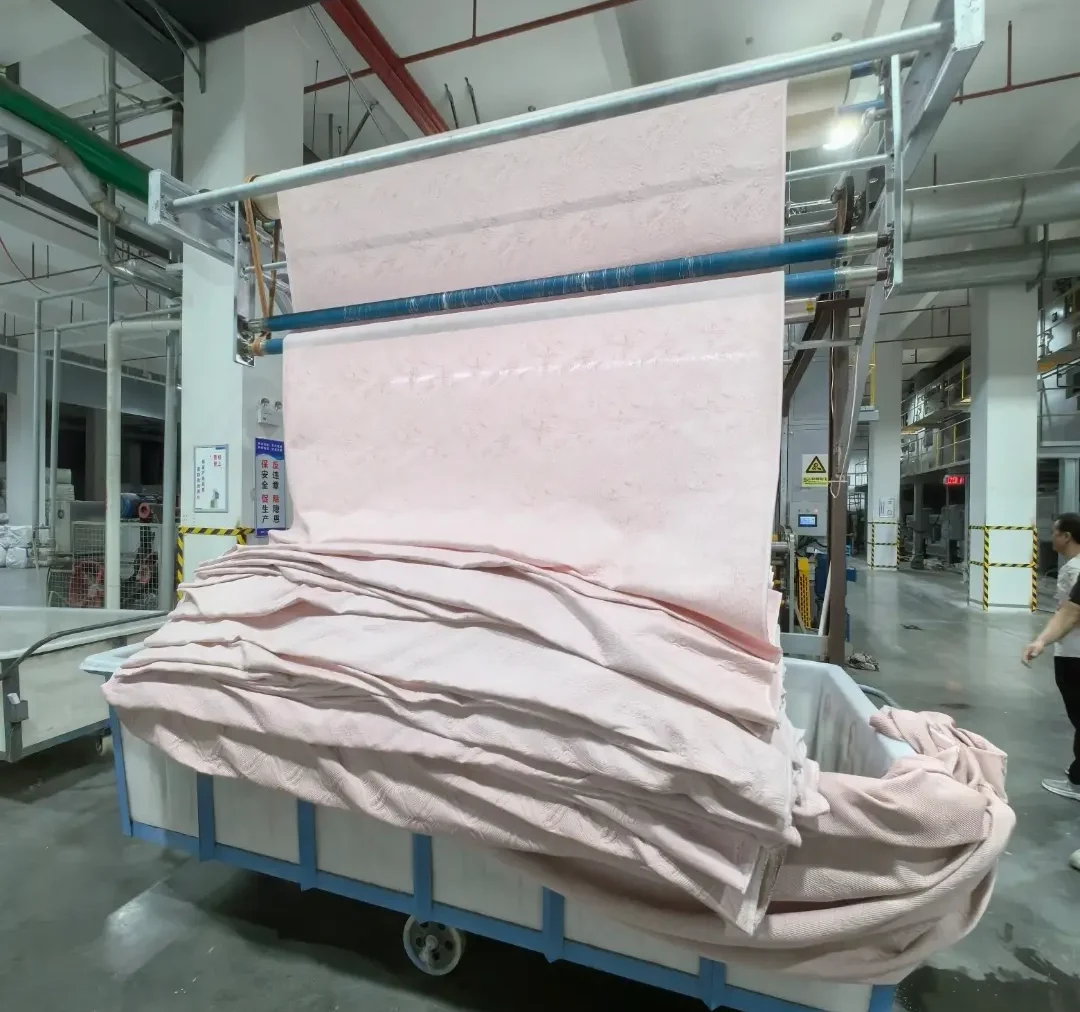
Standard dyeing methods often struggle to penetrate both layers of double‑layer yarn fabrics or triple‑layer cotton‑lined textiles. Dye liquor may be partially absorbed by the outer layer before reaching the inner layer, resulting in a shade mismatch between sides. Overflow dyeing’s continuous immersion ensures that dye liquor makes uniform contact with all layers simultaneously, achieving a consistent shade on both faces and throughout the fabric thickness.
Sportswear and Activewear (Spandex / Lycra Blends)
High‑elasticity sportswear cannot tolerate the mechanical tension of roller‑based dyeing systems. Low‑tension overflow dyeing technology preserves the fabric’s natural stretch recovery while delivering uniform color. Tubular knits requiring dimensional stability benefit from turbulence‑driven immersion that prevents fiber stress accumulation.
Delicate Luxury Fabrics
Silk, modal, Tencel, and fine cotton voile demand minimal mechanical action to preserve luster and hand feel. Overflow dyeing’s gentle liquor flow prevents chafing, creasing, and surface fuzzing, maintaining the fabric’s premium appearance and softness.
High‑Volume Industrial Production
For mills producing 1,000 kg or more per day, reproducibility is paramount. Overflow dyeing systems equipped with automated chemical dosing, digital recipe management, and real‑time monitoring maintain stability across large batches. This ensures that production runs weeks apart yield identical color results—a requirement for brand‑managed global supply chains.
Technical Advances in Modern Overflow Dyeing
Modern overflow dyeing technology has evolved significantly from its earliest implementations, first displayed at ITMA 1967. Today’s systems incorporate:
Digital process control: Precise regulation of liquor flow, temperature profiling, and dye dosing reduces variability and improves reproducibility across batches. Semi‑automatic and fully automatic control architectures are now paired with analytics platforms that surface process deviations in real time, enabling quicker corrective action and reduced wastage.
Low liquor ratio design: Advanced overflow machines operate at ratios of 1:5 to 1:8, compared to conventional ratios of 1:10 to 1:15. One ton of cotton fabric that formerly required 50–60 tons of water can now be dyed with significantly less—reportedly saving up to 50% in water and over 40% in auxiliaries and steam.
Heat recovery systems: Energy recovered from the cooling process can be redirected to pre‑heat incoming water, reducing overall energy demand and operational costs.
Reverse‑flow and multi‑zone temperature modulation capabilities: These features improve dye liquor distribution throughout the sealed chamber, eliminating dead zones where dye concentration might otherwise differ.
Materials compatibility: Systems are now engineered to handle a wider range of fiber types—natural, synthetic, and blended—without compromising throughput or quality. This is especially critical as polyester blends and specialty fibers become more prevalent in global textile supply chains.
Compliance with OEKO‑TEX STANDARD 100: The tight environmental controls of modern overflow dyeing support compliance with OEKO‑TEX STANDARD 100, which bans carcinogenic dyes, aromatic amines, heavy metals, PVC, and phthalates. The certification confirms that fibers, yarns, dyes, and accessories have been evaluated according to internationally recognized criteria.
FAQ
Q1: Is overflow dyeing technology suitable for both natural and synthetic fibers?
Yes. It works with cotton, linen, wool, silk, polyester, nylon, and various blends. High‑temperature models handle polyester and synthetics at up to 140°C.
Q2: How does overflow dyeing compare to traditional jigger dyeing in terms of water usage?
Overflow dyeing typically uses more water than jigger dyeing, but low‑liquor modern models close the gap considerably. Jigger’s 1:3 ratio is extremely water‑efficient but cannot handle knits or elastic fabrics.
Q3: Can overflow dyeing technology achieve consistent color across large production batches?
Yes. Automated chemical dosing, digital recipe management, and real‑time monitoring ensure reproducibility across thousands of kilograms.
Q4: What types of fabrics are unsuitable for overflow dyeing technology?
Very heavy, fully compacted wovens may be better suited to beam or jig dyeing. However, overflow dyeing is highly versatile for knits, light‑to‑medium weight wovens, and multi‑layer textiles.
Q5: How does overflow dyeing technology support sustainable production?
Low liquor ratios (1:6–1:10) significantly reduce water consumption, and heat recovery lowers energy demand. Reduced chemical usage and wastewater volume also support environmental compliance.
Q6: Is overflow dyeing technology expensive to implement?
Initial capital investment is moderate to high. However, reduced water, chemical, and energy consumption—plus improved quality and reproducibility—delivers strong long‑term returns, especially for high‑volume operations.
Conclusion
The textile industry is at a pivotal moment. Rising consumer expectations for color quality, durability, and environmental responsibility are forcing a migration away from outdated dyeing methods toward technologies that can simultaneously deliver superior aesthetics and lower resource consumption. Overflow dyeing technology has proven itself at the intersection of these demands—offering deep, uniform, and durable coloration while protecting even the most delicate fabrics from mechanical stress.
For leading apparel and home textile brands, the choice is not merely technical but strategic. Each roll of fabric from a batch processed with reproducible overflow dyeing technology arrives shade‑matched to every other roll, eliminating costly rework, reducing returns, and strengthening brand reputation. Uniform overflow dyeing technology eliminates head‑to‑tail shading and ensures that a spring collection produced in January perfectly matches a fall reorder produced in September. And sustainable overflow dyeing technology—with low liquor ratios, heat recovery, and reduced chemical consumption—translates directly into measurable carbon and water footprint reductions that resonate with environmentally conscious consumers.
Jiangsu Futai Textile Technology Co., Ltd. offers comprehensive pad dyeing and overflow dyeing services designed for high uniformity, deep color penetration, and excellent colorfastness. Located in Nantong, China’s leading home‑textile manufacturing region, Futai provides industrial‑scale dyeing solutions tailored for yarn‑dyed fabrics, double‑layer structures, triple‑layer cotton‑lined fabrics, and fashion or home textile applications requiring precise color control. Their dyeing workshop is equipped with automated chemical dosing, digital recipe management, and real‑time monitoring—maintaining stability across large batches for exports and premium product lines.
📍 Explore Jiangsu Futai’s pad and overflow dyeing services to discover how the right dyeing partner can elevate your fabric quality, reduce operational risks, and support your sustainability goals.
📦 Bulk processing available for brand‑direct programs, contract dyehouses, and textile manufacturers serving export markets.
🚛 Contact us for a technical consultation, sample request, or to discuss your upcoming production schedule.