
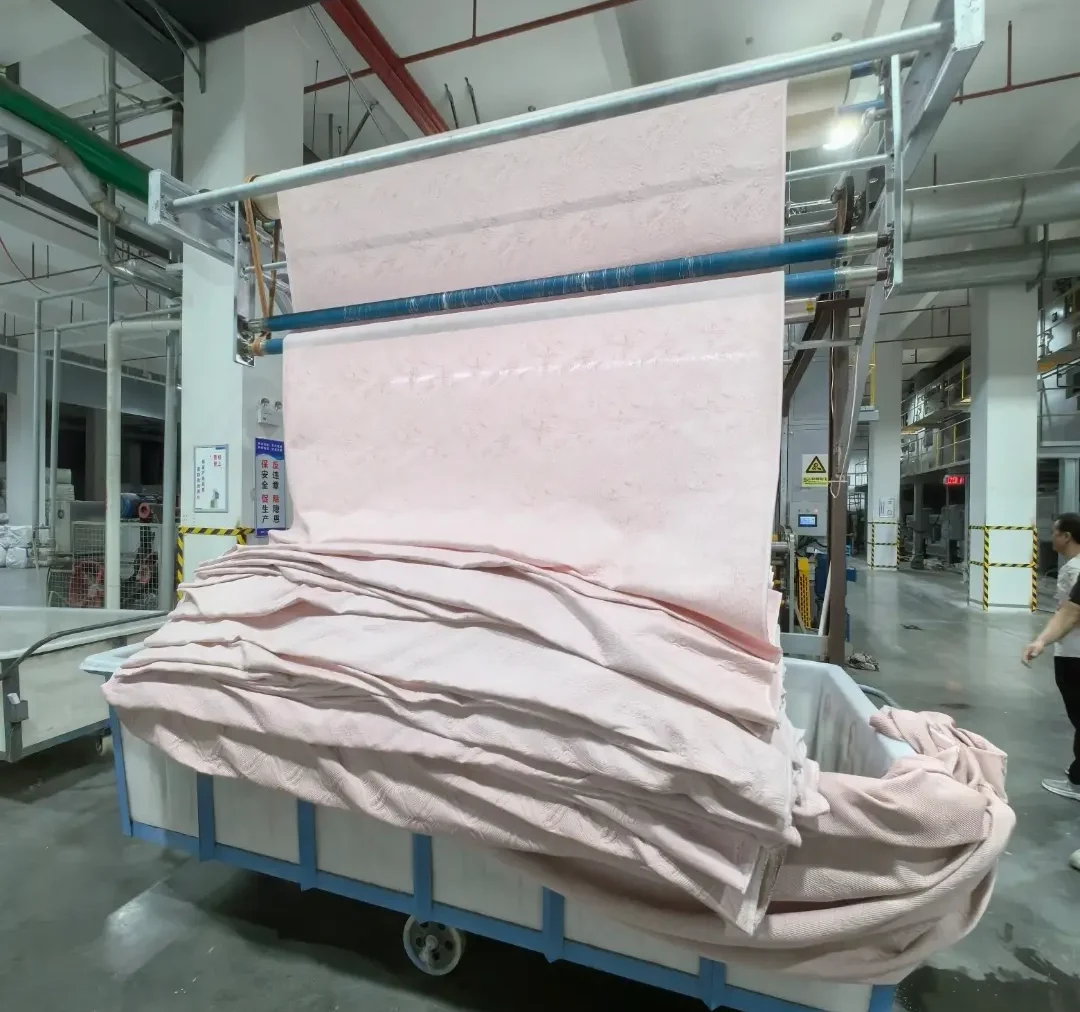
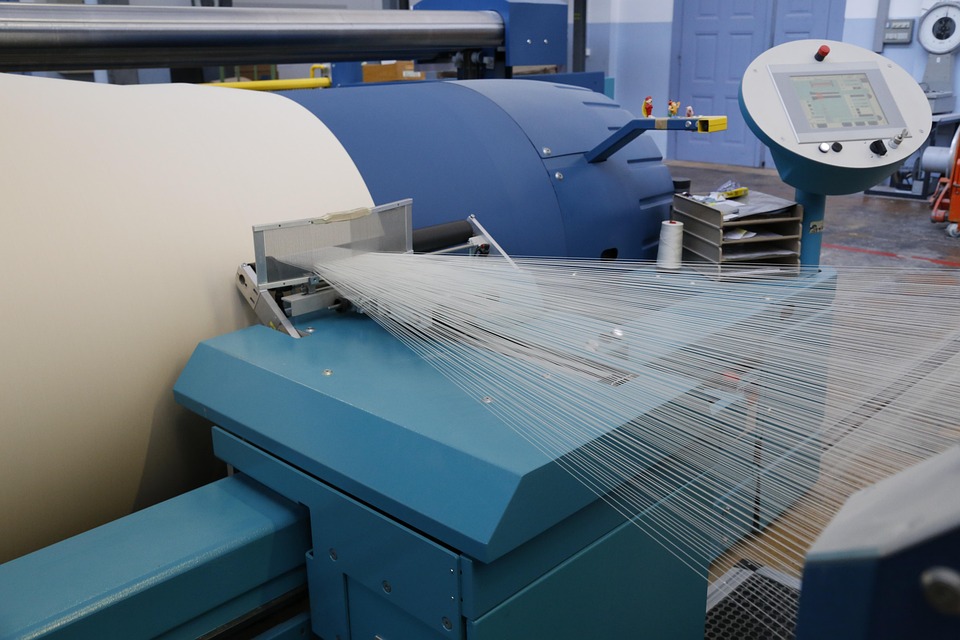

At this year’s National People’s Congress and Chinese People’s Political Consultative Conference sessions, ‘digital economy’ and ‘promoting the transformation and upgrading of traditional industries’ remained topics of significant interest across all sectors. The empowerment of traditional manufacturing through digital technology presents a dual proposition in the digital economy era, offering both dividends and pressures to enterprises. Against the backdrop of China’s sustained economic growth, it can be said that no industry is inherently backward—only technology can lag behind. Beyond the deep application of digital technologies such as AI and big data, enterprises seeking digital transformation urgently require the establishment of a comprehensive system spanning micro to macro levels.
This article endeavours to analyse the challenges faced by textile enterprises in their digital transformation journey through a pathway analysis framework centred on ‘technology-supply chain-ecosystem’. It aims to weave a path for these enterprises to emerge from their cocoons.
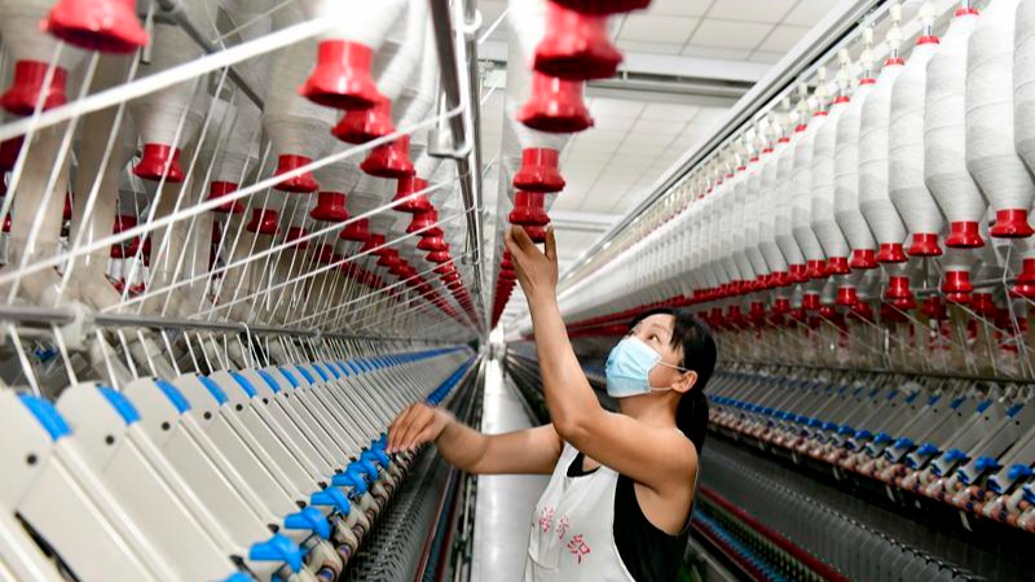
Current situation: The triple predicament of ‘unable to transition’, ‘unwilling to transition’, and ‘unable to transition’
Enterprise digital transformation is influenced by external environmental factors such as market and economic conditions, while also depending on the company’s own development status and industry characteristics. An analytical framework based on three dimensions—technology, organisation, and external environment—enables systematic identification of core challenges faced during digital transformation and pinpoints key influencing factors. This provides reference for formulating effective digital upgrade strategies.
Firstly, the dual shortcomings of cognitive bias and insufficient technical capabilities result in enterprises being unable to transform. The cognitive disconnect between equipment networking and process re-engineering stems from a systemic lack of technical planning. Concurrently, the closed interfaces of imported equipment further exacerbate the difficulty of technical implementation, while data silos severely constrain the development of green supply chains. It is worth noting that some leading enterprises have successfully established digital operational models. For instance, a Chinese global fast-fashion cross-border e-commerce platform leverages a closed-loop user data system to achieve efficient supply chain management, testing 6,000 new designs daily while maintaining a slow-moving inventory rate of just 4.3%. However, this model demands a robust technological foundation, making it difficult for SMEs with weaker digital capabilities to replicate its success directly.
Furthermore, the substantial investment required for digital transformation coupled with uncertain returns leaves many enterprises facing the dilemma of ‘hesitating to transform’. Upgrading to smart manufacturing equipment entails substantial costs; for instance, a single intelligent hanging production line often requires investments exceeding one million yuan. While government subsidy policies alleviate financial pressures to some extent, they may foster dependency among enterprises, undermining their drive for independent innovation. Some businesses remain in a state of wait-and-see, caught between expectations of policy support and resource acquisition, struggling to make decisive choices between costs and risks. This further delays the pace of digital transformation.
Finally, the dilemma of ecosystem synergy lies in the mismatch between platforms and resources, creating barriers that prevent enterprises from transforming. While industrial clusters possess the inherent advantage of spatial agglomeration, this strength has failed to translate effectively into synergistic momentum for digital transformation. Many enterprises lack unified data standards and interoperable infrastructure, resulting in fragmented information across supply chain tiers and hindering efficient collaboration.
Problem-oriented Path Exploration
1. Intelligent R&D and Personalised Customisation: Driving Product Innovation and Upgrades
In product development, AI and machine learning technologies empower enterprises with data-driven innovation models. Businesses can analyse market data such as social media interactions and shopping behaviours to precisely identify consumer preferences, generating trend-aligned design solutions through algorithms. Concurrently, VR virtual prototyping technology shortens product development cycles and enhances prototyping efficiency. By integrating user body measurements with order specifications, enterprises can dynamically adjust production processes to achieve mass customisation, fulfilling diverse consumer demands. Furthermore, the deepened application of intelligent manufacturing enables more precise supply chain coordination, propelling businesses from traditional mass production towards flexible customisation models.
2. Smart Manufacturing: Establishing a Flexible and Efficient Production System
Within the production process, enterprises can leverage IoT technology to deploy temperature, humidity, and vibration sensors throughout the entire workflow—from spinning to printing and dyeing—to collect real-time equipment operation and energy consumption data. Combined with camera systems and environmental monitoring, this enables visualised oversight of production sites. Concurrently, RFID technology facilitates the establishment of product quality traceability systems, ensuring transparency and controllability throughout the entire production chain. Artificial Intelligence (AI) further empowers production optimisation by integrating order, inventory, and equipment data. Through machine learning, it forecasts market demand, optimises production scheduling, and dynamically adjusts plans during unforeseen events like equipment failures. This enables flexible, small-batch, multi-variety production, enhancing efficiency while reducing waste.
3. Green Supply Chain: Achieving Low-Carbon Sustainable Development
In supply chain management, enterprises can leverage intelligent technologies to enhance green operations. Genetic algorithms integrate GPS traffic data to optimise transport routes, while machine learning predicts order fluctuations for intelligent multimodal (rail + road) scheduling. ERP systems enable real-time synchronisation of logistics node data, ensuring traceable carbon footprints from fibre to finished garments. This forms an agile supply chain loop: demand sensing → intelligent scheduling → low-carbon fulfilment. Such digital supply chain management not only reduces transport costs and carbon emissions but also enhances collaborative efficiency across the entire chain, bolstering enterprises’ sustainable competitiveness.
4. Cross-Industry Collaboration: Unlocking the Multiplier Effect of Digital Transformation
Cross-industry cooperation serves as a vital driver for the digital upgrade of textile and apparel enterprises. Through a collaborative mechanism involving government, industry, academia, research institutes, and end-users, governments can spearhead the establishment of regional R&D centres. These centres can partner with universities to tackle common key technologies such as intelligent dyeing and eco-friendly fabrics. Industry associations can develop online exhibition and sales platforms, consolidating corporate product databases and leveraging popular fabric data from e-commerce platforms (such as Douyin) to guide production, thereby helping enterprises precisely align with market demands. Concurrently, logistics firms can jointly establish intelligent warehousing centres, enabling full-chain traceability from yarn to fabric to finished garments and enhancing supply chain coordination efficiency. Through this synergistic closed loop of technological breakthroughs, market validation, and efficiency gains, the digital transformation of textile and apparel enterprises will unlock greater economic and social benefits.
5. Policy Support and Digital Infrastructure Development: Accelerating Industry Transformation
Governments may employ a dual-pronged ‘funding + platform’ approach to advance the textile and apparel sector’s digital transformation. Regarding financial support, authorities could establish specialised subsidies for equipment procurement (e.g., targeted grants for intelligent loom purchases) alongside tax incentives for digital innovation projects (such as first-year income tax exemptions), directly reducing enterprises’ transition costs. Regarding digital infrastructure development, governments can advance the establishment of regional industrial digital platforms. These platforms facilitate data-sharing interfaces between enterprises, provide cloud computing analytics and supply chain collaboration services, thereby lowering technical barriers and enhancing digital transformation efficiency.
The digital transformation of textile and apparel enterprises is not only essential for the industry’s high-quality development but also a crucial measure for integrating ESG values and supporting the implementation of national digital economy strategies. Through smart manufacturing, product innovation, green supply chains, policy support, and cross-industry collaboration, enterprises will continually transcend the limitations of traditional manufacturing, advancing towards a new model of efficient and sustainable development. Amidst the wave of the new technological revolution and industrial transformation, while digital transformation presents challenges, the textile and apparel sector’s path to upgrading is imperative and will usher in a broader future.