
Industrial wrinkle-resistant and crinkle effect finishing technologies represent critical value-addition processes in modern textile manufacturing. This comprehensive guide examines chemical formulations, process engineering parameters, and quality control protocols essential for commercial-scale fabric treatment operations. Textile manufacturers implementing these technologies achieve measurable improvements in product marketability, with wrinkle recovery angles exceeding 120° and durability retention through 50+ industrial wash cycles. The analysis covers DMDHEU and polycarboxylic acid crosslinking systems, mechanical and chemical crinkle processing methods, ISO 23231 compliance requirements, and production cost optimization strategies. Target applications span formal shirting, hospitality linens, technical workwear, and performance sportswear segments, where fabric performance directly impacts brand positioning and customer retention rates.
Wrinkle-Resistant Finishing Technology
Chemical Mechanisms and Resin Systems
Wrinkle-resistant finishing operates through controlled crosslinking of cellulosic fiber chains, creating three-dimensional polymer networks that resist deformation. Two primary resin systems dominate industrial applications:
DMDHEU (Dimethyloldihydroxyethyleneurea) Systems function through methylol group reactivity with hydroxyl groups in cellulose molecules. The curing process at 150-170°C forms methylene ether bridges between fiber chains, establishing permanent dimensional stability. Typical application concentrations range from 50-100 g/L, with magnesium chloride catalysts (15-25 g/L) accelerating crosslink formation. DMDHEU treatments deliver wrinkle recovery angles of 130-150° and maintain performance through 60+ commercial laundry cycles. The primary limitation involves formaldehyde emission during curing, requiring exhaust gas treatment systems and finished fabric testing below 75 ppm thresholds per Oeko-Tex Standard 100.
Polycarboxylic Acid (PCA) Systems represent formaldehyde-free alternatives using citric acid, butanetetracarboxylic acid (BTCA), or proprietary polymer blends. These compounds form ester crosslinks with cellulose hydroxyl groups through dehydration reactions at 160-180°C. Sodium hypophosphite catalysts (30-50 g/L) enable efficient crosslinking at commercially viable temperatures. PCA treatments achieve wrinkle recovery angles of 120-140° with superior fabric hand retention compared to DMDHEU systems. Chemical costs run 15-25% higher, but elimination of formaldehyde monitoring and environmental compliance costs often justifies the investment for premium product lines.
Durability ratings depend on crosslink density, fiber accessibility, and fabric construction parameters. Plain weave cotton fabrics accept higher resin loads than twill or sateen constructions, directly correlating with performance longevity. Blended fabrics containing 35-50% polyester exhibit reduced chemical uptake but improved dimensional stability through inherent fiber properties.
Process Parameters and Equipment Requirements
Industrial wrinkle-resistant finishing requires precise control of application, fixation, and curing stages. Padding application systems maintain bath concentrations through automated dosing, with squeeze roller pressure settings of 2.5-3.5 bar, achieving 65-75% wet pickup rates. Higher pickup percentages increase chemical consumption without proportional performance gains, while insufficient pickup creates uneven treatment distribution.
Curing protocols vary by resin chemistry and fabric weight. DMDHEU systems cure effectively at 145-165°C for 90-180 seconds in continuous stenter frames, with lighter fabrics (≤150 gsm) requiring shorter exposure times. PCA systems demand higher activation energy, necessitating 165-180°C for 120-240 seconds to achieve complete ester bond formation. Undercuring produces inadequate crosslink density, resulting in premature performance degradation. Overcuring causes fiber tendering, reducing tensile strength by 20-30% and creating harsh fabric hand.
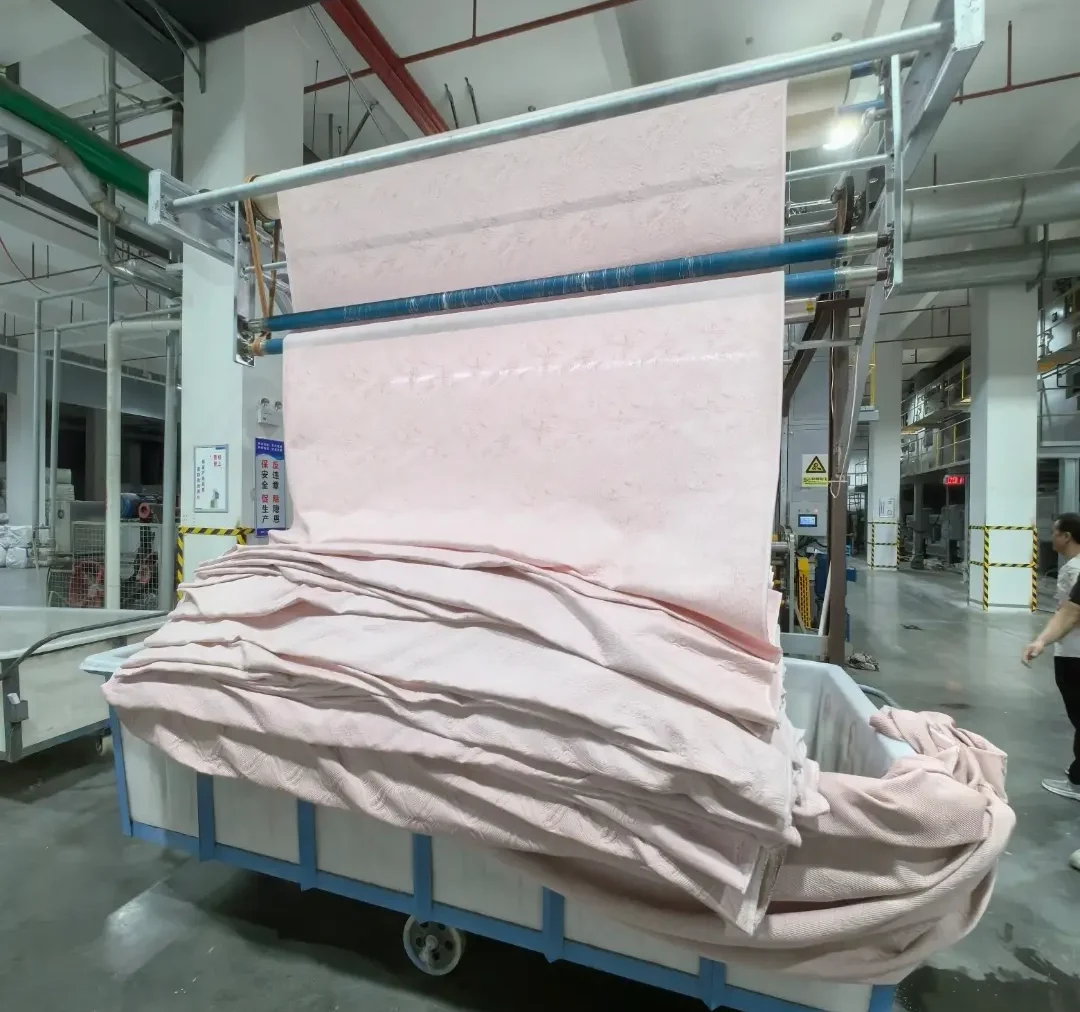
Continuous processing systems integrate padding mangles, infrared pre-dryers, and multi-chamber stenter frames in single-pass configurations. Production speeds of 30-60 meters/minute accommodate most commercial fabric weights, with automated tension control preventing dimensional distortion during heat exposure. Capital investment ranges from $450,000-$850,000 depending on working width (1800-3600mm) and automation sophistication.
Batch processing alternatives utilize pad-batch-wash sequences for smaller production volumes or specialty applications. Fabrics receive chemical application, undergo controlled ambient storage (12-48 hours) for room-temperature crosslinking, then proceed through washing and drying. This approach reduces energy consumption by 40-50% but extends processing time significantly, limiting applicability to long-run specialty products.
Crinkle Effect Finishing Methods
Mechanical Crinkle Processing Techniques
Mechanical crinkle finishing creates permanent three-dimensional surface textures through controlled fabric deformation and heat-setting. Roller compression methods employ engraved metal rollers operating at 180-220°C under 40-80 bar pressure, embossing specific patterns into thermoplastic fiber components. Polyester-rich fabrics (≥65% synthetic content) respond optimally to mechanical crinkle processing, as the thermoplastic fibers undergo glass transition and retain deformation upon cooling.
Pattern consistency depends on roller surface precision, fabric tension uniformity, and dwell time control. Industrial systems maintain roller temperature variation within ±3°C across the working width, preventing uneven texture development. Processing speeds of 15-35 meters/minute balance production efficiency with adequate heat transfer for pattern fixation.
Heat-setting protocols following mechanical deformation involve controlled cooling under tension to lock three-dimensional structures. Rapid cooling (forced air at 20-25°C) produces sharper texture definition, while gradual cooling (ambient conditions) yields softer aesthetic effects. Cellulosic fabrics require resin pre-treatment with 20-40 g/L crosslinking agents before mechanical processing to achieve wash-durable crinkle effects, as natural fibers lack inherent thermoplastic memory.
Pattern retention through 30+ wash cycles requires a minimum 60% synthetic fiber content or supplementary resin crosslinking. Commercial applications include decorative apparel fabrics, upholstery textiles, and technical fabrics where surface texture provides functional benefits such as enhanced moisture transport or reduced skin contact area.
Chemical Crinkle Treatment Applications
Chemical crinkle finishing exploits differential shrinkage between fiber types or fabric zones to create permanent surface texture. Caustic soda treatment represents the most established method, utilizing 180-280 g/L sodium hydroxide solutions at 85-95°C for 15-45 minutes. Cotton fibers undergo mercerization, increasing crystallinity and inducing 8-12% linear shrinkage. When applied to fabric areas containing shrinkage-resistant components (polyester yarns, resin-treated zones), differential contraction creates permanent puckering effects.
Treatment ratio control determines texture intensity. Light crinkle effects require 180-220 g/L NaOH concentrations with 15-20 minute exposure, producing subtle surface variation suitable for shirting applications. Heavy crinkle textures demand 240-280 g/L concentrations with 30-45 minute processing, creating pronounced puckering for decorative apparel and home textile applications.
Differential shrinkage principles extend beyond caustic treatment to include enzymatic processing, plasma treatment, and localized resin application. Cellulase enzyme systems (2-4% owf) selectively degrade cotton fiber surfaces, inducing controlled shrinkage without harsh chemical exposure. Processing at pH 4.5-5.5 and 50-55°C for 30-60 minutes achieves comparable effects to mild caustic treatment with superior fabric hand retention and reduced environmental impact.
Washability retention depends on the permanence of the shrinkage differential. Caustic-induced crystallinity changes remain stable through 100+ wash cycles, while enzyme-treated fabrics maintain texture through 40-60 cycles before gradual relaxation. Supplementary crosslinking treatments (15-25 g/L PCA resins) applied post-crinkle processing extend durability to 80+ cycles, justifying the additional processing cost for premium product positioning.

Quality Standards and Performance Testing
International Compliance Requirements
ISO 23231 wrinkle recovery standards define test methodologies and performance classifications for wrinkle-resistant textiles. The standard specifies sample conditioning at 20±2°C and 65±4% relative humidity for minimum of 24 hours before testing. Wrinkle recovery angles measured after 5-minute crease compression under 10 N load classify fabrics into performance grades: Grade 1 (≥140°), Grade 2 (120-139°), Grade 3 (100-119°), and Grade 4 (<100°). Commercial wrinkle-resistant products target a Grade 1-2 classification to justify premium pricing.
AATCC Test Method 66 (Wrinkle Recovery of Woven Fabrics: Recovery Angle) provides North American industry standardization. The test employs specialized apparatus measuring combined warp and weft direction recovery angles. Acceptable performance thresholds vary by end-use: formal shirting requires ≥260° combined angle, casual apparel accepts ≥240°, while technical workwear demands ≥280° for professional appearance retention.
Oeko-Tex Standard 100 certification addresses consumer safety concerns regarding chemical residues in finished textiles. Product Class II (direct skin contact) limits formaldehyde content to 75 ppm, restricts extractable heavy metals, and prohibits carcinogenic dyestuffs. Manufacturers utilizing DMDHEU systems must implement rigorous after-washing protocols and conduct batch-level testing to ensure compliance. PCA-based systems typically achieve certification with simplified testing protocols due to inherent formaldehyde-free chemistry.
Performance Metrics and Durability Assessment
Wrinkle recovery angle measurement provides a quantitative assessment of treatment effectiveness. Industrial quality control protocols test a minimum of 5 specimens per production batch in warp and weft directions. Statistical process control charts tracking mean recovery angles and standard deviation enable real-time process adjustments, maintaining consistent product quality across production runs.
Wash cycle retention testing simulates commercial laundry conditions through accelerated testing protocols. AATCC Test Method 135 (Dimensional Changes of Fabrics after Home Laundering) combined with periodic wrinkle recovery measurements, quantifies performance degradation. Premium wrinkle-resistant fabrics maintain ≥85% of initial recovery angle through 50 wash cycles, while economy treatments may decline to 70-75% retention at equivalent testing intervals.
Formaldehyde emission limits require continuous monitoring for DMDHEU-treated fabrics. Japanese Law 112 specifies ≤75 ppm for products contacting skin, while European regulations under REACH enforce similar thresholds. Testing methodologies per ISO 14184-1 (water extraction method) or JIS L 1041 (vapor absorption method) must demonstrate compliance before market release.
| Treatment Type | Chemical Cost ($/kg fabric) | Processing Time | Durability Rating (cycles) | Suitable Fabric Types |
|---|---|---|---|---|
| DMDHEU Resin | $0.15-0.28 | 90-180 sec cure | 60-80 | 100% cotton, cotton-rich blends |
| PCA Systems | $0.22-0.35 | 120-240 sec cure | 50-70 | Cotton, linen, cellulosic blends |
| Mechanical Crinkle | $0.08-0.15 | 20-40 sec emboss | 30-50 | Polyester ≥65%, synthetic blends |
| Chemical Crinkle | $0.12-0.22 | 15-45 min treatment | 40-100 | Cotton, cotton-polyester blends |
Commercial Applications and ROI Analysis
Target Market Segments
Formal shirting represents the largest volume application for wrinkle-resistant finishing, with global market demand exceeding 2.8 billion meters annually. Premium dress shirt manufacturers require Grade 1 performance (≥140° recovery angle) with minimal strength loss (≤15% tensile reduction). Treatment costs of $0.20-0.30 per meter enable retail price premiums of $8-15 per garment, delivering attractive margins for branded apparel producers.
Hospitality linens demand exceptional durability through industrial laundry processing. Hotel and restaurant table linens undergo 120-180 wash cycles annually at 75-85°C with aggressive detergent systems. Wrinkle-resistant treatments reduce labor costs by 40-60% through elimination of ironing requirements, justifying treatment costs of $0.25-0.40 per meter. Performance specifications require ≥70% wrinkle recovery retention after 100 commercial wash cycles.
Technical workwear applications prioritize professional appearance retention in demanding environments. Healthcare uniforms, corporate uniforms, and industrial workwear benefit from combined wrinkle resistance and soil-release treatments. Multi-functional finishing systems add $0.35-0.55 per meter to production costs but enable 25-35% price premiums in B2B contract markets where appearance standards directly impact brand perception.
Performance sportswear incorporating crinkle effects achieves aesthetic differentiation while providing functional benefits. Three-dimensional surface textures reduce fabric-to-skin contact area by 15-25%, improving moisture management and thermal comfort. Premium activewear brands utilize mechanical crinkle finishing on polyester-spandex blends, accepting treatment costs of $0.18-0.28 per meter to support retail price positioning 30-40% above commodity performance fabrics.
Production Cost Optimization
Chemical consumption rates vary significantly by application method and fabric characteristics. Conventional padding systems consume 30-50 g/L for light treatments (100-120° recovery) and 60-80 g/L for premium performance (≥140° recovery). Foam application technology reduces chemical usage by 30-40% through precise metering and reduced water content, lowering per-meter treatment costs by $0.05-0.08 while maintaining equivalent performance levels.
Energy efficiency improvements focus on curing system optimization. Infrared and gas-fired heating systems achieve 15-25% energy savings versus traditional electric stenters through improved heat transfer efficiency. Combined heat and power (CHP) systems recover waste heat from curing exhaust, reducing facility energy costs by 20-30% when processing volumes exceed 15,000 meters daily.
Wastewater treatment considerations impact total finishing costs significantly. DMDHEU systems generate effluent containing 200-400 ppm COD and 50-80 ppm formaldehyde, requiring biological treatment and chemical precipitation. Treatment costs range from $0.08-0.15 per cubic meter of effluent. PCA systems produce lower COD loads (120-200 ppm) with zero formaldehyde, reducing wastewater treatment costs by 35-45% while simplifying environmental compliance documentation.
FAQ Module
Q1: What is the typical production capacity for industrial wrinkle-resistant finishing lines?
Modern continuous finishing lines process 25-60 meters per minute depending on fabric weight and treatment complexity. A standard 2400mm working width system operating 20 hours daily achieves 35,000-75,000 meters weekly capacity. Batch processing systems handle 800-1,500 kg per batch with 4-6 hour cycle times, suitable for smaller operations or specialty products requiring frequent formula changes.
Q2: How do wrinkle-resistant treatments affect fabric breathability and hand feel?
Resin crosslinking reduces air permeability by 8-15% through partial pore closure in fabric structure. DMDHEU treatments at standard concentrations (60-80 g/L) create slightly stiffer hand feel, while PCA systems maintain superior softness at equivalent performance levels. Silicone softener application (15-25 g/L) post-treatment restores hand feel while maintaining wrinkle resistance, adding $0.03-0.06 per meter to processing costs.
Q3: What are the key differences between durable press and easy-care finishing?
Durable press finishing involves high-temperature curing (160-180°C), creating permanent crosslinks for maximum wrinkle resistance through 80+ wash cycles. Easy-care finishing uses lower cure temperatures (140-155°C) with reduced resin concentrations, achieving moderate wrinkle resistance (110-125° recovery angle) through 30-50 cycles at lower treatment costs. Product positioning and target price points determine the optimal finishing approach for specific market segments.
Optimal wrinkle-resistant and crinkle effect finishing method selection requires systematic evaluation of fabric composition, performance requirements, production scale, and total cost of ownership. Cotton and cotton-rich fabrics benefit most from PCA-based crosslinking systems offering formaldehyde-free processing and superior hand feel retention. Polyester-dominant fabrics achieve cost-effective results through mechanical crinkle processing, eliminating chemical consumption while delivering wash-durable texture effects.
Production scale considerations favor continuous processing systems for volumes exceeding 25,000 meters weekly, while batch systems provide flexibility for specialty applications and frequent product changes. Environmental compliance costs increasingly influence finishing method selection, with formaldehyde-free PCA systems and mechanical processing methods reducing regulatory burden and wastewater treatment expenses.
Balancing performance durability with processing costs enables textile manufacturers to optimize margin contribution across diverse product portfolios. Premium market segments justify advanced finishing technologies delivering Grade 1 performance through 60+ wash cycles, while value-oriented products achieve acceptable results with economy treatments targeting 40-50 cycle durability. Strategic finishing technology investment aligned with brand positioning and customer requirements establishes a sustainable competitive advantage in increasingly differentiated textile markets.